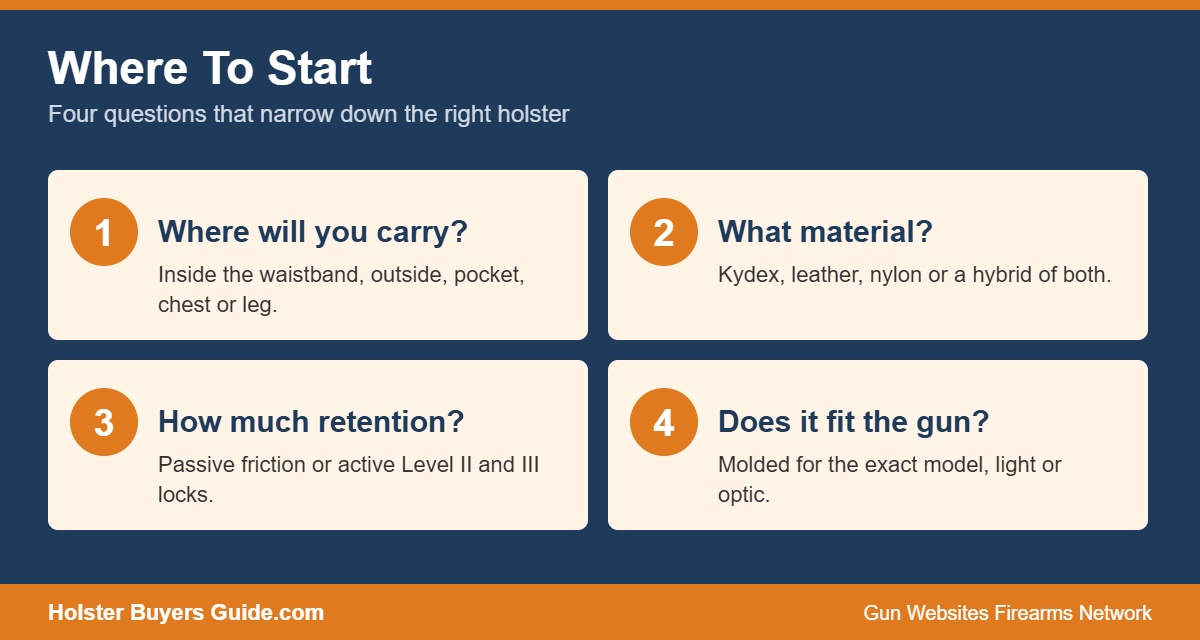
Every good holster choice comes down to four questions: where it rides, what it is made of, how firmly it holds the gun, and whether it fits that exact gun. Answer them in order and the field narrows fast.
1. Where will you carry?
Start with the carry position, because it decides most of what follows. Concealed carry usually means inside the waistband or a pocket holster. Open carry, the range and hunting favor outside the waistband. Duty and tactical work often use a drop leg, and long drives or heavy coats suit a shoulder rig. The Carry Positions guide compares them side by side.
2. What material?
Kydex is fast, rigid and nearly maintenance free. Leather is classic and comfortable once broken in. Nylon is light and inexpensive. Hybrids pair a Kydex shell with a soft backer. See Holster Materials for the full comparison.
3. How much retention?
Retention is how securely the holster holds the gun. Most concealed carry holsters rely on passive friction, while duty holsters add one to three active locks. The Retention and Safety page explains the levels.
4. Does it fit the gun?
A holster must be made for the exact make and model, including any light, laser or red dot. It should cover the trigger guard completely, hold the gun upside down without dropping it, and stay open for one-handed reholstering.
Watch the series
The Gun Websites “What Holster to Buy?” series covers every style on this site. Start with part one:
More videos are collected on the Holster Videos page. Holster Buyers Guide.com is part of the Gun Websites Firearms Network; for the guns that go in these holsters, see Revolver Buyers Guide.com, and the right rounds are covered at Ammo Buyers Guide.com.
Shop holsters
Shop links are affiliate links. See the affiliate disclosure.