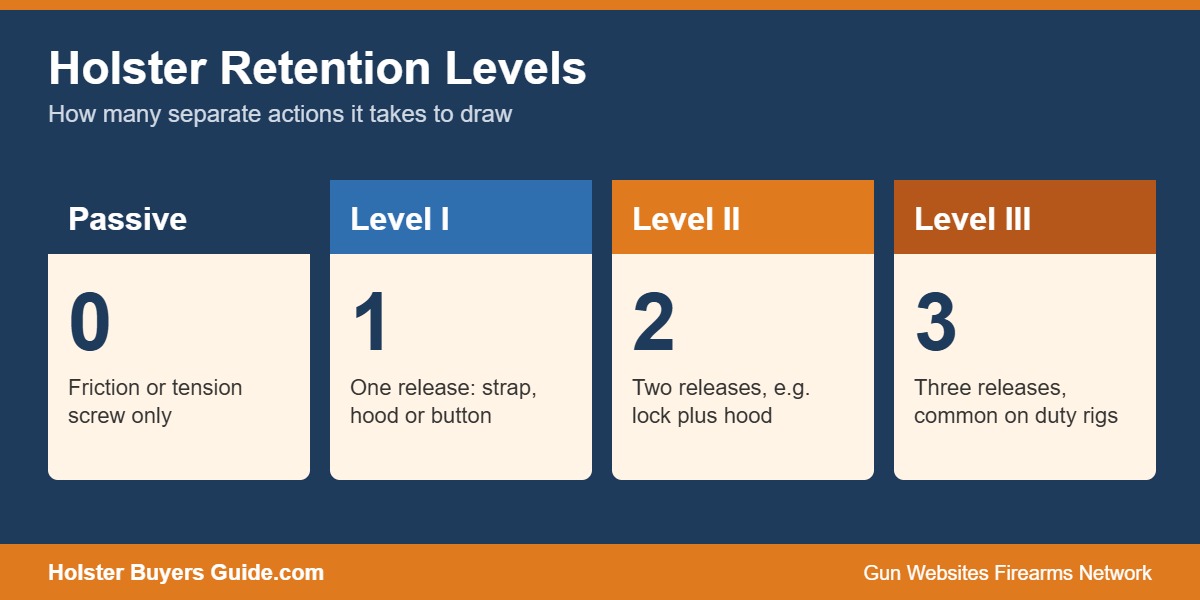
Retention is how securely a holster keeps the gun in place. The right amount depends on how the gun is carried and who might reach for it.
Passive retention
The holster grips the gun by friction, usually by snapping over the trigger guard, often with a tension screw for adjustment. This is the standard for concealed carry, where the gun is hidden and speed matters.
Active retention: Level I, II and III
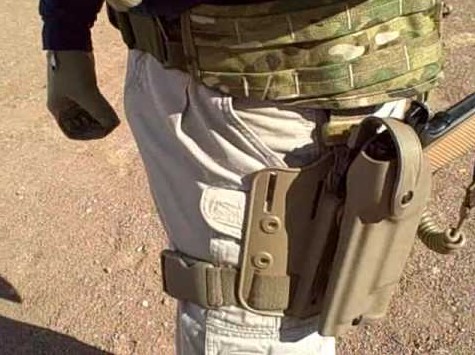
Each level adds a separate action needed to draw, such as a thumb strap, a rotating hood or a locking button. Duty holsters for law enforcement commonly run Level II or III, since an open-carried gun can be grabbed. The Safariland ALS lock is a well-known example.
Holster safety checklist
- Covers the trigger guard completely, with no gap for a finger or object.
- Made for the exact gun, light and optic.
- Stays open after the draw so reholstering takes one hand.
- Rides on a stiff gun belt so it does not shift or sag.
- Reholster slowly, eyes on the holster, clothing clear of the mouth.
Carrying and the law
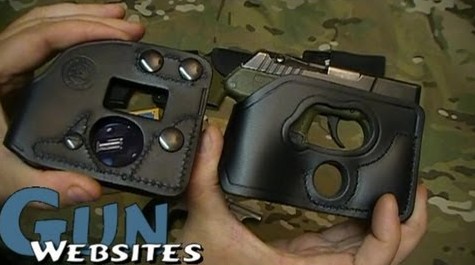
Carry laws differ by state, and some cover how a gun must be carried. Check local rules before carrying, and see the video below on wallet holsters and the law. Questions can be sent in at Ask Gun Questions.com.
Shop holsters
Shop links are affiliate links. See the affiliate disclosure.